Lately, God has been speaking to me daily about the face of the Lord.
Not His hand.
Not His blessings.
Not His miracles.
His face.
What started as a single verse slowly became a pattern. I began to notice it everywhere in Scripture. Genesis. Psalms. The Prophets. The Gospels. Revelation. Once my eyes were opened, I could not unsee it.
This is not poetic language. This is biblical language.
In the King James Version, references to the face of God appear approximately 90 times across Scripture. God does not repeat Himself casually. Repetition reveals priority.
From the very beginning, the face of God represents access.
When Cain sinned, his cry was not about punishment. It was about separation.
“And from thy face shall I be hid”
Genesis 4:14 KJV
To be hidden from God’s face meant to lose covering, direction, and nearness.
Yet later, Jacob encounters God and says,
“I have seen God face to face, and my life is preserved.”
Genesis 32:30 KJV
What should have destroyed him preserved him. God was already revealing mercy long before the law.
Then comes the covenant blessing spoken over Israel:
“The Lord make his face shine upon thee”
Numbers 6:25 KJV
Blessing does not begin with provision. It begins with God turning His face toward a people. Everything else flows from that.
David understood this deeply.
“When thou saidst, Seek ye my face; my heart said unto thee, Thy face, Lord, will I seek.”
Psalm 27:8 KJV
Book of Psalms
Notice the order. God speaks first. Seek My face. The response comes from the heart, not obligation. Seeking God’s face is always God initiated. Awareness itself is invitation.
But Scripture also reveals something sobering and necessary.
“The face of the Lord is against those who do evil,
To cut off the remembrance of them from the earth.”
Psalm 34:16 NKJV
This verse adds balance to the revelation.
The face of the Lord is not neutral.
It shines toward righteousness, humility, repentance, and truth.
It is set against persistent evil, injustice, and rebellion.
God’s face brings blessing to some and resistance to others. Not because He is unfair, but because His face represents His holiness. To live before His face is to live accountable.
David understood that seeking God’s face meant alignment, not entitlement.
Moses carried this understanding even further.
“The Lord spake unto Moses face to face, as a man speaketh unto his friend.”
Exodus 33:11 KJV
This was not physical sight. Scripture later makes clear that no one can see God’s full glory and live. This was relational clarity. Unfiltered fellowship.
And Moses refused to move without it.
“If thy presence go not with me, carry us not up hence.”
Exodus 33:15 KJV
That is maturity. Refusing progress without presence.
The prophets speak of seasons where God hides His face, not to abandon, but to correct and draw hearts back.
“And I will wait upon the Lord, that hideth his face”
Isaiah 8:17 KJV
Silence was not rejection. It was invitation.
Then comes the turning point of Scripture.
“For God… hath shined in our hearts, to give the light of the knowledge of the glory of God in the face of Jesus Christ.”
2 Corinthians 4:6 KJV
What was once veiled is now revealed. The face of God is made known in Christ. Seeking the face of the Lord is no longer distant striving. It is conscious living before Him.
And Scripture ends where the longing began.
“And they shall see his face.”
Revelation 22:4 KJV
No veil. No separation. No interruption.
From Genesis to Revelation, the face of the Lord spans law, worship, judgment, repentance, redemption, and eternity. It tells us something essential.
God is not calling us to do more.
He is calling us to come closer.
But coming closer requires alignment.
The face of the Lord blesses righteousness.
The face of the Lord resists evil.
The face of the Lord exposes, corrects, and restores.
This season is not about speed.
It is about alignment.
And if you are reading this, it is not coincidence. It is invitation.
“Seek ye my face.”
And may our hearts continue to answer,
“Thy face, Lord, will I seek.”
I’m Dr. Ruth Hephzibah
Eat, drink and be merry
This is that season to eat, drink and be merry.
Forget your sorrows. God will take care of that.
The bible says in Nehemiah 8:10
“Then he said unto them, Go your way, eat the fat, and drink the sweet, and send portions unto them for whom nothing is prepared: for this day is holy unto our Lord: neither be ye sorry; for the joy of the Lord is your strength.”
Follow on TikTok https://www.tiktok.com/t/ZP8y1rQyU/
#celebration #eating #easyrecipes #merrychristmas
Daily Dose of Fresh Start
A fresh start is possible, one day at a time
Some mornings do not feel new.
They feel heavy.
They feel familiar in the ways you hoped you had outgrown.
And yet, you are here.
A fresh start does not always arrive with fireworks or big decisions. Sometimes it arrives quietly. In the moment you choose to get up anyway. In the breath you take before reacting. In the way you decide not to carry yesterday’s weight into today’s body.
You do not need to fix your whole life today.
You do not need to have clarity.
You do not need to feel strong.
All that is required is this moment.
Today can be a reset, not because everything changed overnight, but because you are still willing to begin again. Even if that beginning is small. Even if it is slow. Even if it is messy.
A fresh start is not about erasing the past.
It is about choosing yourself in the present.
One day at a time is not weakness.
It is wisdom.
And today, this day, is enough.
I’m Dr. Ruth Hephzibah
What does 12/12 mean to me?

To me, 12/12 is not about numbers lining up. It is about alignment. It feels like a spiritual pause, a moment where God gently asks me to check in with my heart before the year closes.
In Scripture, twelve often represents divine order. When I see it doubled, I think of God emphasizing structure, intention, and completion. It reminds me that even when my life feels messy or unfinished, God is not confused about my season.
12/12 speaks to stability. It tells me that what God is building in my life has a foundation. It reassures me that delays are not denials and that growth does not always look loud or dramatic. Sometimes it looks like quiet obedience, healing behind the scenes, and learning to trust again.
On this day, I reflect on what I am carrying that no longer belongs in the next season. I ask myself what needs to be released and what needs to be realigned. Faith. Focus. Rest. Boundaries. Hope.
12/12 reminds me that God is intentional with timing. He does not rush the process, and He does not waste pain. What feels unfinished today is still under construction.
For me, 12/12 is a whisper, not a shout. It says slow down. Look again. Trust Me.
I’m Ruth Hephzibah
Grief does not erase love
Sometimes grief feels like a pause you never asked for. You are moving through life, building, loving, dreaming, and then loss steps in and rearranges the room. You look around and nothing is where it used to be. Even your heart feels unfamiliar.
But here is what I have learned in the quiet places. Grief does not erase love. It reveals it. It pulls back the curtain and shows you how deeply you were connected, how much of yourself you poured, and how powerful the imprint of love truly is. What you shared does not vanish. It becomes part of your becoming.
Every stretch you feel. Every ache that surprises you in the middle of a good day. Every moment you stop and remember. These are signs that love lived here. And love leaves a residue strong enough to carry you forward.
Today, breathe. Honor what was. Acknowledge what still hurts. And trust that you are being shaped for life beyond this moment. You are not behind. You are becoming.
Dr Ruth Hephzibah
Bittersweet November
I sat down today, just trying to relax, letting old Afro beats carry me somewhere lighter. Then that song came on, “Fall in Love” by D’banj. The moment those first notes hit, it felt like someone opened a door in my chest. Suddenly I was back in the early days, young and hopeful, dreaming about forever with the man I loved. That was our couple dance song. We would have been celebrating 17 years of marriage this November 22nd. Seventeen. It still catches me.
The first thing that came to mind was our little circle. Twelve years. Twelve beautiful years of marriage with four boys who carry pieces of him in their eyes, their laughter, their walk. It felt like a complete circle at the time. Whole. Covered. Full.
Then grief whispered something that hurts every time. The thought that I wasted twelve whole years only for it to end in death. That terrible, heavy ache that asks, “What was the point if it ended like this?”
People say grief fades. I don’t know that it ever does. It shifts and changes shape, but it never fully leaves. There are seasons when it feels like I am breathing normally, and seasons like this one when Emmanuel’s absence sits beside me like a shadow. Bitter and sweet at the same time. Sweet because of the memories. Bitter because of the vacuum he left behind.
I look back at all the effort we put in. The sacrifices. The prayers. The plans. The late night dreams of growing old together. Rocking on a porch somewhere, watching grandchildren run around. We really believed we would get there.
Losing him taught me that love is never wasted. Even when it is cut short, it still leaves something behind. It shaped me. It stretched me. It gave me four incredible boys who carry both our stories forward.
And thank God for the love I have found now. It is a blessing I do not take lightly. It is not a replacement and it will never be. Emmanuel’s memory holds its own place in my heart. What I have now is a new chapter, not a rewrite of the old one. A gift that reminds me that my heart can hold both grief and love at the same time.
This season is tender. It brings joy and pain. It reminds me of what was and what could have been. But it also reminds me that I survived. That love did not die with him. That I am still capable of feeling, giving, and receiving love.
The grief never fully goes away, but neither does the love.

Create the life you desire.
💞 When Touch Stops Talking: The Silent Cost of a S*Xless Life
Let’s be honest — nobody ever plans to stop having intimacy.
It doesn’t happen overnight.
It’s a slow fade.
It starts with “I’m tired.”
Then, “Let’s try tomorrow.”
And before you know it, tomorrow turns into two months, and your body forgets the rhythm of being desired.
You start sleeping on opposite edges of the bed, facing the wall instead of each other. Conversations become practical — bills, kids, groceries. The kind that fills the air but starves the soul.
And here’s the truth no one wants to say out loud: when intimacy goes silent, the heart starts whispering, “Am I still wanted?”

🌸 The Body Keeps the Score (and the Silence)
Science is loud about this one: the body remembers everything — including neglect.
When we stop engaging in intimacy, our bodies quietly adjust. Hormones like oxytocin and dopamine — the “feel good” and “bonding” chemicals — start to dip. You might not notice it immediately, but over time, the absence of connection feels like emotional dehydration.
Your smile doesn’t stretch as wide.
Your laughter feels more like an echo than a release.
Even your skin — that living, breathing canvas of touch — begins to forget what warmth feels like.
And it’s not just emotional. Your body literally changes.
Your immune system weakens.
Your sleep gets lighter.
Your stress hormones spike.
I once spoke with a woman who said, “I’m fine without intimacy. I’ve learned to live without it.”
But when she finally cried in my session, she whispered, “It’s not the act I miss, it’s the feeling of being chosen.”
That’s the part science can’t quite measure — the ache of invisibility.

🌹 The Hidden Science of Touch
Intimacy is not just pleasure; it’s biology.
When two bodies connect, the nervous system exhales. The heart rate synchronizes. The brain releases a cocktail of calm — serotonin, dopamine, oxytocin — that lowers anxiety, boosts immunity, and nurtures emotional bonding.
Researchers at Wilkes University found that people who engage in intimacy twice a week have 35% higher immunoglobulin A levels — a natural antibody that guards against infection.
In short: connection is medicine.
And when you withdraw from it for too long, your brain interprets it as isolation — even if you’re married, even if you “don’t need it anymore.”
Because it’s not about frequency; it’s about connection.
Touch tells the brain, “You are safe. You belong.”
Without it, the body starts scanning for danger — hence the fatigue, mood swings, and emotional distance that creep in quietly.

💋 The “I’m Fine” Season (But You’re Not)
We live in a culture that tells women to be strong, independent, unbothered.
“Girl, you don’t need nobody to validate you.”
And while empowerment is beautiful, denial is not.
You can be powerful and still crave intimacy.
You can be independent and still long to be held.
There’s no shame in wanting to be touched, seen, and desired — that’s not weakness; that’s divine design.
Even Scripture tells us that two become one — not only spiritually but biologically. There’s healing coded in connection. There’s chemistry in closeness.
When we suppress it, we don’t become stronger; we become disconnected.

🌿 When the Spark Fades
Kayla and Leo had been married for ten years. No fights, no drama. Just silence.
Every night, Kayla turned off the lamp before Leo even finished brushing his teeth. He quietly scrolled through his phone beside her. Their bodies shared a bed but not a story.
One evening, Kayla said, “We’re fine, right?”
Leo paused. “Of course.”
But his voice carried that flat, practiced tone — the one used when truth feels dangerous.
I once asked them softly, “When was the last time you kissed for more than three seconds?”
There was silence.
They looked at each other, searching their memories like two travelers who had lost the map home.
They couldn’t remember.
And that’s how most disconnection begins – not always with betrayal, but often with neglect.
The quiet kind.
The kind that replaces laughter with logistics and affection with routine.

Reawakening Touch and Connection
If this story feels familiar, don’t panic. Healing intimacy doesn’t begin in the bedroom — it begins in the heart.
Here are gentle yet sacred ways to restore connection and remember each other again:

1️⃣ The 10-Second Rule
Each day, share a hug that lasts at least ten seconds.
Not the polite, distracted kind — a real embrace, long enough for your heartbeats to find each other again. This simple ritual lowers cortisol, melts tension, and reminds the body, “I am safe here.”

2️⃣ Talk Naked — Emotionally First
Before shedding clothes, shed pride.
Sit together and speak honestly.
Say, “I miss us,” or, “I feel far away.”
Emotional nakedness always precedes physical healing. It’s not about performance; it’s about presence.

3️⃣ Relearn Playfulness
Bring laughter back into your rhythm.
Dance badly in the kitchen. Watch something silly together. Tease gently.
Flirt without expectation. Playfulness is foreplay for the soul — the moment when the body remembers joy and the heart relaxes enough to be touched again.

4️⃣ Sensual, Not Just Sexual
Sensuality is the art of being fully present in your own body and inviting your partner to do the same.
Try gentle massages, candlelit baths, shared journaling, or cooking side by side.
It’s not about seduction — it’s about remembering how to feel again.

5️⃣ Spiritual Reconnection
Sit together in stillness. Pray. Hold hands without words.
When two spirits find alignment, the body follows effortlessly.
Healing never rushes; it remembers.

💖 The Body Misses You
A s*xless life doesn’t just affect your relationship — it numbs your emotional core.
— Dr. Ruth Hephzibah
Your body is designed for connection, not just survival.
So, if you’ve found yourself in that quiet, disconnected season, this is your gentle invitation to return.
Not just to your partner, but to yourself.
You deserve to feel alive again.
You deserve to be touched with tenderness and intention.
You deserve to remember what warmth feels like.
Because healing begins not when someone touches you but when you decide to let yourself be touched again.
Founder, Sacred Sensuality
A soft space for couples rediscovering divine connection through body, faith, and healing.
The day you plant the seed is not the day you eat the fruit

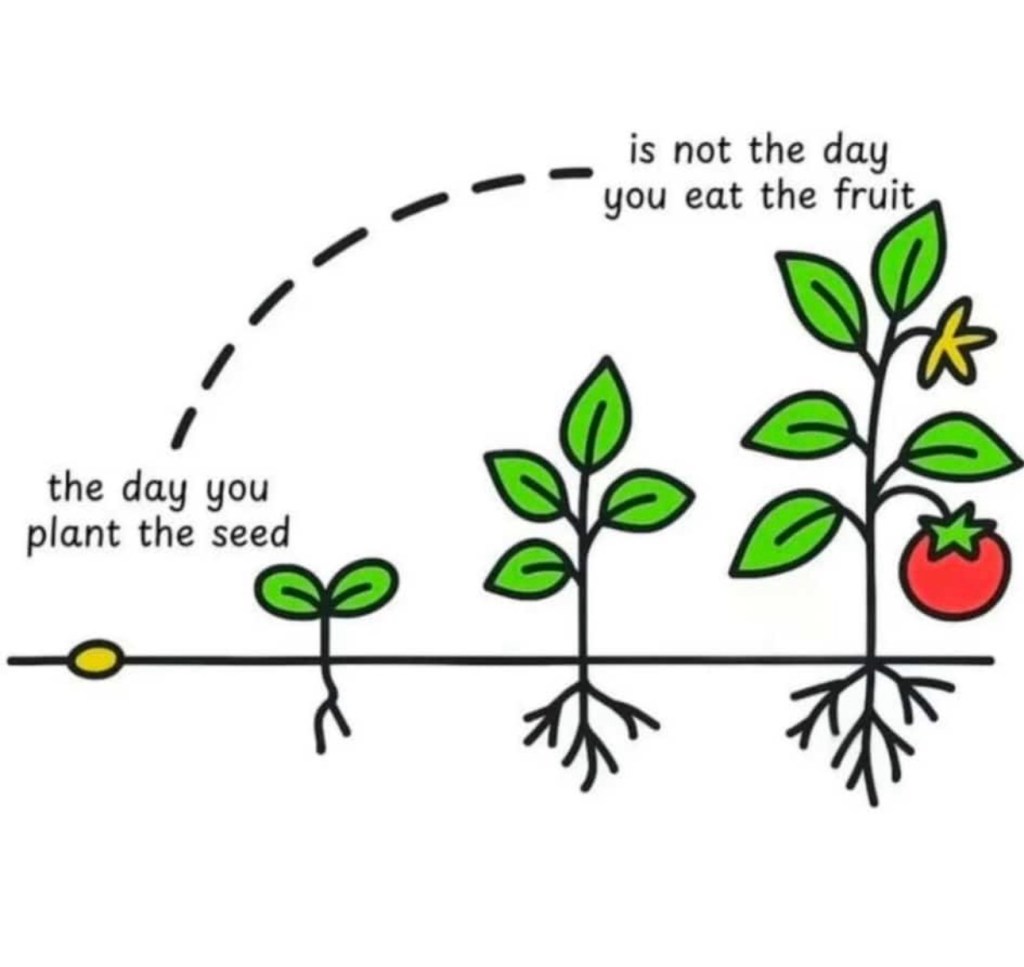
This photo stopped me in my tracks today.
It’s such a simple drawing, yet it carries one of life’s greatest truths.
We live in a world that glorifies quick results instant success, overnight growth, and fast breakthroughs. But real transformation doesn’t work that way. Growth is quiet. It’s slow. It happens beneath the surface long before it becomes visible.
Between planting the seed and eating the fruit, there are seasons of watering, waiting, pruning, and trusting. Seasons when nothing seems to be happening yet everything is happening. 🌿
So if you’re in that waiting season right now building your dream, healing from loss, rebuilding your life, or nurturing a new idea; remember this: patience is part of the process.
Keep showing up. Keep watering the seed. Your fruit is growing, even if you can’t see it yet. 🍅
— Dr. Ruth Hephzibah
Nuggets
When you think of the word “successful,” who’s the first person that comes to mind and why?
The Silent Funeral
Yes dear,
There are some funerals no one attends.
Not because there were no invitations,
but because no one knew something sacred had died.
The funeral when part of you dies from the grief of being unnoticed.
When your light flickers quietly,
your laughter softens,
and your dreams begin to whisper instead of roar.
No one sends flowers to that kind of funeral.
No one offers condolences for the parts of you that stopped hoping.
But heaven notices.
God counts every tear that falls in silence.
And grace yes, grace has a way of breathing life back into what grief buried.
You can rise again.
Not as who you were, but as who you’re becoming.
If you’ve attended that invisible funeral, this is your resurrection season.
You are seen. You are not forgotten.
— Dr. Ruth Hephzibah
Unvalidated: A Soft Place for Every Soul That Grieved in Silence
Unvalidated: A Soft Place for Every Soul That Grieved in Silence
By Ruth Hephzibah
Introduction
Unvalidated: A Soft Place for Every Soul That Grieved in Silence
Let me tell you a secret:
Some grief doesn’t cry at funerals.
It doesn’t get sympathy cards, casseroles, or prayer lines.
Some grief… gets labeled “too sensitive,” “too dramatic,” “too emotional.”
But it’s still grief.
Just wearing makeup and holding a smile.
This book isn’t about death, though some parts of you may have died.
It’s about invisible losses.
The ache of waiting to be seen.
The gut-punch of not being chosen.
The quiet collapse after watching everyone else get clapped for while you sit backstage with your full heart and empty inbox.
This is for the girl who stayed soft while everyone overlooked her.
For the man who wanted to scream but was only taught how to serve.
For the child who smiled for the class photo after being told, “You’re not enough.”
For the adult who still wonders if they’re too much, too weird, too needy, too late.
Unvalidated is a soft place.
Not a solution.
Not a sermon.
Just a space.
A space to cry in peace.
To unravel with dignity.
To tell the truth about the things that didn’t break you physically but bruised your soul in ways no one saw.
I wrote these chapters like journal entries you weren’t allowed to write.
The moments you brushed off.
The spiral after he didn’t text back.
The panic when your story got “seen” but not “liked.”
The awkwardness of celebrating others while secretly wondering, “When is it my turn?”
You may not see your full self in every story.
But I promise… you’ll feel your shadow.
The you that quietly whispers, “What about me?”
That whisper matters here.
We’ll laugh.
We’ll cry (ugly cry, the good kind).
We’ll name the wounds.
And then we’ll stitch them with truth, with humor, with heaven’s kind of healing.
This isn’t a manual for perfection.
This is a mirror—held gently.
Because the truth is…
You were always valid.
You were always enough.
And heaven was clapping the whole time.
Come. Sit. Breathe.
This is your soft place.
Let’s begin.
Chapter 1: The Day I Almost Died Because of “Like”
It wasn’t pneumonia. It wasn’t heartbreak. It wasn’t food poisoning from that suspicious jollof rice at Sister Riri’s engagement party. No. The day I almost died was the day I tied my worth to digital applause.
Have you ever hit “post” and suddenly your heart starts racing like you just submitted your soul to be voted on? That was me.
I posted something raw. Something deep. Something that came straight from prayer, journaling, and a three-day fast where God wrecked me and rebuilt me. And I kid you not—ten minutes in, no likes.
I stared at the screen like it owed me something. Refreshed the app five times. Still nothing. Then, the voice came: “Take it down. No one cares.”
That voice wasn’t God. It wasn’t discernment. It was the little girl inside me, still chasing her daddy’s nod. Still rehearsing the silence of people who should’ve cheered but didn’t. I’d been here before—back in high school when I won an award and my mom said, “Cool. So what’s next?” I remember thinking, “So… no hug? No party? No fried rice at least?”
And just like that, the lie was born:
You’re only valuable if someone claps.
Now enter Stella. Yes, we’re using a fake name—but if your eye twitched, maybe it’s your spirit that’s familiar.
Stella had just been invited to speak at a major event. Like, big-big. She should’ve shouted. Instead? Homegirl texted 4 friends like she was polling an election: “You think I’m good enough?” “Should I say yes?” “What if I flop?”
God had said yes. But she needed man to echo it before she believed it.
I watched her spiral. Watched her beg for the very confidence God had already deposited. She spoke. She was powerful. People cried, worship broke out, demons probably packed their bags. And the first thing she asked after?
“Did I do okay?”
I wanted to grab her and shout, “You just changed someone’s life and you’re still waiting on a grade?”
Let me tell you what I did.
I looked in the mirror that night and made a vow:
“No more asking people to affirm what God already authored.”
Then I sent myself flowers. No joke. Pink roses. Card said:
“You didn’t die today because of ‘like.’ You lived. And that’s enough.”
No more begging for likes to feel alive. You survived the silence. You outlived the insecurity. And you’re about to walk into a new rhythm where you clap for yourself first.
Next up? We’re diving into Rejection Rehab — I Sent Myself Flowers This Time. If you’ve ever waited for them to celebrate you and they forgot… this one’s your healing letter.
Watch out for the next post. You don’t want to miss it.
Next chapter? Things get spicy.
Chapter 2: Rejection Rehab — I Sent Myself Flowers This Time
I used to bend like cooked spaghetti. I’d shrink so they’d stay. Quiet down my dreams. Soften my voice. Dim my light. All because I wanted to be chosen.
Let’s talk about a guy. We’ll call him Brother Soft Boy—ministry leader, theology quotes on Facebook, had the nerve to play Maverick City on repeat. He wasn’t evil, just emotionally unavailable wrapped in church culture.
We “talked.” As in “talked” but never committed. He hyped my calling… but couldn’t affirm me unless I dimmed it.
One day I posted a vulnerable reel. Full of healing. Pure oil. I almost didn’t post it, but the Holy Spirit nudged me. After I posted, I waited.
You know what Bro Soft Boy did?
Nothing.
Didn’t comment. Didn’t call. Didn’t even drop a prayer emoji.
But I saw him under Sister Waistline’s dance challenge, talking about, “Glory to God.” I nearly flung my wig.
In that moment, I felt stupid. Exposed. Like I gave my pearls and someone asked if they were plastic.
But instead of spiraling, I sat with it. I let the ache sit. Not to torture myself—but to finally trace the lie.
The lie said:
“If they ignore you, it means you aren’t valuable.”
“If he doesn’t notice, you aren’t beautiful.”
“If they don’t respond, you aren’t relevant.”
And I whispered back, “Lies. All of it.”
I picked up my phone. Sent myself a bouquet. Yellow tulips this time. Card said:
“I saw you. You did good. I’m proud of you.”
Heaven clapped. I did too.
And that was the day I started clapping first—for me.
Hey, send the flowers. Toast to your own growth. Celebrate without the crowd. You’re worth more than who forgot to clap.
Next? Let’s talk about The Validation Hangover. Why clapping too hard for clout will leave your soul dizzy and dehydrated. Whew!
Stay tuned—next post will bless you.
Chapter 3: The Validation Hangover
Validation is sweet—until it isn’t.
You ever get high off someone’s praise and then crash when they don’t show up the next time?
That’s the validation hangover.
It’s the internal detox your soul needs when you’ve been sipping too much approval. And trust me, I had a whole bottle.
This happened with my podcast. I launched. God gave me the name. The episodes were flowing. I was fired up. Week one, support was loud. Shares. Comments. “You’re called, sis!”
Week two… silence.
I panicked. Was I irrelevant already? Did I lose the oil overnight?
And then God whispered, “Did I send you here for them… or for Me?”
Boom.
See, applause is addictive because it mimics affirmation. But it’s not the same. Applause is about how they feel when you perform. Affirmation is about who you are when no one is watching.
I had to learn that the crowd is not my compass.
So I detoxed. I went 30 days without checking analytics. No peeking at views. No stressing over follows. Just pure, obedient release.
Did I lose some momentum? Maybe.
But I gained peace.
And that peace? Baby, it’s better than a viral post.
Claps fade. God’s yes doesn’t. You’ve detoxed from their noise—now it’s time to take your power back fully.
Up next is Why I Don’t Chase “Pick Me” Energy Anymore. If you’ve ever sat in a room trying to be chosen, this one’s for you.
Next post is loading—watch for it.
Chapter 4: Why I Don’t Chase “Pick Me” Energy Anymore
I used to beg for tables that couldn’t hold the weight of my destiny.
I’d audition for love. For ministry invites. For friendship. I’d wear the “easygoing” mask—because heaven forbid I looked needy. I’d rehearse silence just to be tolerable. And the worst part? I’d call it humility.
Lies.
That wasn’t humility. That was survival.
Let me tell you about a girl named Naomi. She applied for a leadership program. Overqualified. Holy Spirit-filled. Passionate. But when the interviews came, she second-guessed her fire.
She dumbed down her story. Smiled too much. Ended every sentence with “But that’s just me, I guess…”
She didn’t get picked.
She cried for a week.
Then I sat her down, handed her a box of tissues and a green smoothie, and said, “You weren’t rejected. You were redirected. That room would’ve asked you to shrink.”
Then I made her write down ten things about herself she’d silenced to be liked.
She cried again. But this time, something broke. A stronghold. A lie.
Next month, she reapplied. No edits. No shrinking.
She didn’t just get in—she got a mentorship bonus and a scholarship. Look at God.
So no, I don’t chase “Pick Me” energy anymore.
I walk in “I’ve Already Been Sent” energy.
God chose me. He approved me. His yes is louder than their maybe.
And if they don’t pick me?
I still win.
Pick yourself. Every time. Because purpose doesn’t need an audition. And the stage God has for you doesn’t need a panel of judges.
Coming next? My Clapback is My Calling. Let’s talk about how we heal loudly and serve boldly. It’s the final chapter and it’s powerful.
Watch for the next post—it’s your cue to rise.
Chapter 5: My Clapback is My Calling
So what now?
Now, I clap back.
Not the petty way—don’t worry, I’ve healed. Mostly.
My clapback now is purpose. It’s boldness. It’s unapologetic light. It’s doing the very thing the enemy said I couldn’t do unless someone else approved it.
My clapback is launching the course without a crowd.
Starting the business when no one said, “I believe in you.”
Writing the book when the old crew stopped responding to your texts.
Marrying wholeness before I ever wait for romance.
I clap by showing up. Fully. Loudly. Unashamed.
Because validation doesn’t keep me anymore.
Assignment does.
Now I wear the bold lipstick. Take myself out on dates. Dance in the kitchen while cooking stew. Write affirmations on Post-its like they’re prophecies. Tell myself, “You’re powerful. And you didn’t need a comment to prove it.”
So let me say this loud for the girl reading in secret, unsure if she can do it scared:
You can.
Clap for yourself.
Every time you heal.
Every time you post the truth.
Every time you walk away from the wrong room.
Every time you honor your voice.
Because you, my dear—you are not just seen. You are SENT.
And you don’t need another like to prove it.
And just like that… you remembered who you were. You broke the cycle. You clapped back with purpose. You healed.
Want more gists, healing stories, and heart-to-heart downloads? Let me know. We’re just getting started.
Share this with someone who forgot how powerful they are. And stay close—more’s coming.
Chapter 6: She Didn’t Cry at the Funeral, But She Broke Down Over an Unsent Text
Tife didn’t cry when her daddy died.
She sat there in the front row, lace tight around her waist, face beat to perfection, lashes like wings, not one tear. People said, “She’s strong.” Some said, “That girl no get emotion.” But nobody really asked what was going on beneath the MAC foundation and the waterproof mascara.
Let me tell you what I know.
Tife cried, just not there. She cried months later, over a paragraph she sent to an old friend who didn’t even reply. Not a thumbs-up. Not a “Hey, thanks.” Just read the message and disappeared into the void of digital ghost town.
That’s what broke her.
And that, my dear, is validation grief.
Let me break it down for you.
Tife grew up with a father who was present but never present. Oh, he paid bills. Took them to church. Picked them up from school. But affirm her? Nah. The man could recite Psalms but couldn’t say, “I’m proud of you.” He was quick to correct but slow to comfort. The only time he clapped was when she got a scholarship—and even then he said, “That’s what you’re supposed to do.”
So little Tife learned that to be seen, she had to perform. She had to achieve. She had to give her best just to be barely acknowledged.
So fast forward to adulthood.
Now she’s 28, in therapy, got a good job, and deep down still haunted by this ache:
“If I do well enough, maybe someone will finally see me.”
But here’s the gag.
Validation grief is sneaky. It doesn’t look like traditional grief. You don’t always cry. Sometimes you just over-explain in voice notes. Sometimes you send 4 follow-up texts because someone took too long to respond. Sometimes you cancel a post because nobody liked it in the first 10 minutes. Sometimes you buy a new outfit for someone who’s never complimented you.
Sometimes… you fall apart not because they hurt you, but because they didn’t notice you were bleeding.
That’s Tife.
So, this one time, she messaged this childhood friend—let’s call her Amaka. They hadn’t spoken in years. Tife had just gotten nominated for an award in her industry. Big deal. She wanted to share. Not for clout. Just to be seen.
“Hey girl, just wanted to share something. I know we haven’t talked in a while but I got nominated for the Excellence in Women’s Leadership thingy and I’m a little in shock lol. Anyway, thought of you. Hope you’re good.”
That message. Heartfelt. Honest. Brave.
Left on read.
Sis unraveled like Nigerian soup with no seasoning cube. I’m talking chest pain, deep sighs, overthinking Olympics. All because she needed a response that didn’t come.
But if you zoom out… you’ll see it wasn’t even about Amaka. It was about daddy. About every silent applause. Every missed moment. Every celebration where Tife stood on stage and scanned the room for a face that never smiled wide enough.
That’s validation grief.
And if you don’t identify it, it will twist your sense of worth. It’ll make you keep trying to fix people who didn’t break you. You’ll try to earn attention in rooms you were never meant to sit in. You’ll over-give. Over-serve. Over-prove. And under-rest.
You’ll start measuring your value by reaction. And worst of all? You’ll call it “just being nice.”
I sat with Tife one evening. I made her tea, gave her my fuzzy blanket, and played some old-school worship music. Then I said, “Tell me who you’re really waiting on.”
She paused. Eyelashes trembling. She whispered, “I don’t know. Maybe… everyone?”
And we both laughed that kind of tired-laughter. The kind where you realize your grief had been driving the car and you’ve been the passenger the whole time.
So we did the work. We wrote letters. Not to send. Just to heal.
She wrote one to her dad.
“Dear Daddy, I needed you to clap. I needed you to look at me like I was more than your responsibility. I wanted to hear ‘good job
Chapter 7: She Didn’t Want Him, She Just Wanted to Be Picked First
Let’s talk about a girl named Eloho.
Smart. Kind. Big eyes like truth serum. If you looked close, you’d see she carried her confidence like a wig—well-fitted, but very removable.
She was the kind of woman who knew how to sit pretty at brunch, give advice like Oprah and pray like Hannah. But also the kind that could post a deep word online and delete it 17 minutes later because only two people liked it—and one of them was her cousin.
Now Eloho didn’t think she was insecure. Nah, she had too much swag for that. She had her degrees, her perfume shelf, her healed playlists, and a whole highlight reel of moments that said, “I got this.”
But deep down, in a room she rarely visited, sat a grief she didn’t have words for:
Validation grief.
Let me paint it for you.
So there’s this guy—Daniel.
Regular. Well-meaning. Nothing spectacular. Just vibes and voice notes. Not her husband. Not her headache. Just there.
He’d call sometimes. Send reels. Ask how her week was going. But never pursued her. Never committed. Just danced around her attention like a mosquito with manners.
And sis? She ate it up.
Not because she wanted him. But because she needed to be picked.
See, in high school, Eloho was the invisible girl. The “good friend.” The one guys borrowed pens from while they winked at her louder friend. And she told herself it didn’t matter.
She graduated with straight A’s and silent grief. Grew up and put achievement over affection. But inside, she still carried the ache of never being chosen. Of always being second. Of being the one who got “You’re so amazing, I just don’t see you that way.”
So Daniel was like a warm familiar. The possibility of being noticed.
She never wanted his last name. She just wanted to feel like the first option.
One day, they were on the phone—vibes flowing. Laughs. Shared YouTube links. He even said, “If you were here right now, I’d cook for you.” A lie, but a sweet one.
After the call, she floated. And then she did something she hadn’t done in a while. She prayed. Not the “Lord bless my day” kind. The raw, ugly-cry kind. The “God, why does it feel good to be halfway wanted?” kind.
And God said something. Something that sliced her in the gut:
“You’re not after him. You’re after the version of you that finally feels seen.”
She fell silent.
Because it was true.
Daniel was just the symptom. The ache? That was deeper. That was a girl who never heard, “You’re the one I’ve been praying for.” A girl who knew how to love others but didn’t believe love would find her first.
And that’s the wicked thing about validation grief—it will have you reaching for broken places dressed as blessings. It will make you crave crumbs and call it connection.
So I gave Eloho homework. I said, “You’re going to write a new version of your ‘picked’ story. One where you’re chosen by you. Before anyone else gets the chance.”
She blinked like I just asked her to climb Kilimanjaro barefoot.
“Chosen by me?” she said.
“Yes. You. The woman who stayed. The woman who kept showing up. The woman who cries and heals and still pours out.”
We roleplayed it, too. I played her younger self—14-year-old Eloho, baggy uniform, no Valentine’s Day card, just watching the popular girls get flowers from boys who barely passed biology.
“Say something to her,” I said.
Eloho choked.
Then she said, “You’re not invisible. They just don’t have the eyes to see your worth yet. But one day, you’ll look in the mirror and pick yourself—and it’ll feel better than every late reply you’ve ever received.”
We cried. Both of us. Loudly. Snot and all.
Because that’s what healing does—it digs up grief in the places you thought were just your personality.
So here’s the thing.
If you’re chasing closure from someone who was never committed…
If you’re performing for rooms you don’t even want to be in…
If you’re still waiting for someone to say “You’re it,” before you believe you are…
That’s validation grief, boo.
And if you don’t confront it, you’ll keep chasing people who are just mirrors of your old ache.
But when you heal it? Whew. You stop begging to be chosen.
You realize—you were always worth picking.
Next chapter? We’re talking about Silent Screenshots and Loud Insecurities—when your whole mood shifts because someone saw your story but didn’t respond. Don’t lie. You’ve been there.
Watch out for the next post. We’re healing in layers. But we’re healing loud.
Chapter 8: Silent Screenshots and Loud Insecurities
There’s a special kind of warfare that happens in your chest when someone watches your story, doesn’t like your post, doesn’t respond to your message, but you KNOW they were online. You see the green dot. You saw the blue ticks. You saw the views. And yet—crickets.
Let me introduce you to Adanna.
Adanna is THAT girl. Businesswoman. Jesus lover. Can pray down fire and pitch a grant proposal all before lunch. Edges always laid, captions always captioning, outfits coordinated like the Proverbs 31 woman met Pinterest and had a glow-up.
But Adanna had a wound she didn’t know she was nursing.
She’d post a word that hit like thunder and healing—“You are not your past, sis. You are the testimony that broke the curse.”
And guess what?
Her ex watched it.
Three times. No comment. No message. Just views.
Adanna spiraled.
Not outwardly. Nah, she was too “mature” for that. But inside? Oh, sis was shaking like a phone on 1% battery.
She checked his profile. Still active. Still posting memes. Still liking other people’s stuff. But hers? Ghost town.
That was the day she realized how loud silence can be when you’re grieving unvalidated parts of your story.
Because it wasn’t about him. Not really.
It was about all the times she had shared her heart and gotten nothing back.
All the times she was there for everyone and no one showed up for her.
All the voice notes she poured healing into… left on “Seen.”
All the encouragement she gave… echoed back in crickets.
So yeah. One view, no comment? It hit. Harder than it should’ve.
I saw it on her face when we met up.
We were at this cozy café with overpriced tea and retro wallpaper. She was stirring her matcha like it offended her.
“He saw it,” she muttered.
I blinked. “Saw what?”
“My story. The one I made yesterday.”
“And?”
“No reaction.”
“And?”
“No emoji. No ‘Amen.’ Not even a heart-eye. He watched it three times. THREE.”
She clapped between words like she was casting out demons.
And then she paused. “Why does that bother me? Like, why do I care?”
And that’s when I smiled.
Because sis just diagnosed herself.
“Because it’s not about the emoji,” I told her. “It’s about the echo.”
She looked confused.
“You were hoping someone would respond to the version of you that never got a response when it mattered.”
She blinked.
“His silence isn’t new. It just triggered the old.”
That’s when her lip trembled.
She whispered, “I used to beg my mum to watch me dance at school events. She’d be on her phone. I remember spinning around on stage, looking for her face.”
And there it was.
Validation grief.
The kind that sneaks into adulthood wearing stilettos and scripture, but still cries when attention is withheld.
We sat in that moment. I pulled out a napkin and said, “Write a message to your younger self. Tell her the dance was beautiful, even if nobody clapped.”
She scribbled. Tear-stained words. Powerful words.
Then we roleplayed the scenario.
She was seven-year-old Adanna again—pink tutu, excited eyes.
And I clapped.
Loudly.
“You were magical. I saw you. You were unforgettable.”
She sobbed.
Because what she really needed wasn’t a reply from a man.
She needed a reply from her own history.
That’s the trap of digital life. We think it’s about the algorithm, the silence, the views. But what we’re really doing is trying to go back in time and edit a scene where we were ignored.
And when that healing doesn’t come, we take every little silence personally.
So here’s the intervention.
If you’re stuck in a spiral because they watched but didn’t clap,
If you’re rehearsing what you should’ve said to make them reply,
If your confidence drops every time your story goes “Seen” but not shared,
Pause.
Breathe.
And ask yourself:
“What part of me is still grieving being unseen?”
Then show up for that version of you.
Take her to lunch. Clap for her dance. Applaud her bold post. Celebrate her like the room is full of angels.
Because when you validate her, silence stops being a trigger—it becomes a teacher.
You’ll start reading blue ticks as “Not assigned to respond.”
You’ll start seeing ghosting as redirection.
You’ll stop craving echoes, because you’ve become your own amplifier.
And the best part?
You won’t need to delete your post. You’ll let it stand as a monument to your healing.
Next up? We’re diving into Chapter 9: When the Applause Becomes a Prison—how even constant validation can trap your soul in performance mode.
Watch out for the next post. You’re not just healing. You’re remembering your power.
Chapter 9: When the Applause Becomes a Prison
There’s a type of prison that smells like roses and sounds like clapping.
You don’t know it’s a cell until the noise stops and you forget who you are without it.
That was Remi’s story.
Now, Remi was a firebrand. Everything she touched turned to inspiration. Women would sit in rooms just to hear her talk. She had testimonies for days, breakthrough galore. Her IG lives were mini revivals. She carried wisdom like wine—aged, rich, a little sharp, a little sweet.
But Remi had a problem she didn’t know she had.
She only felt loved when she was liked.
Not by one person. By everyone.
If her posts didn’t perform, she’d feel like she failed God.
If a speaking engagement didn’t go viral, she questioned her calling.
If her reel didn’t get saved at least 100 times, she’d delete it and cry.
She didn’t see it at first. Because applause is tricky like that. It feels like approval, so you keep performing. You tell yourself it’s “impact” but really, it’s addiction.
She called me one night in full meltdown mode.
I was folding laundry, halfway through worship, when my phone buzzed.
“I don’t think I’m doing enough,” she said, barely breathing between words. “I posted a clip from the women’s event and it flopped. Like—flopped. Maybe people are over me. Maybe I missed God.”
Now pause.
Two days before this call, this same woman had just helped a girl walk out of depression. Literally prayed with her at an altar in tears.
But one post underperformed, and she spiraled.
That’s the prison of applause.
When you can’t separate identity from output.
When you’re only confident after confirmation.
When you feel less holy if people aren’t saying “Amen” under your quotes.
So I asked her a question she didn’t expect.
“What would you post if no one ever liked it, but God smiled every time?”
She went silent.
Then she said, “I don’t know anymore.”
And there it was.
The applause had become her compass. Her confidence. Her comfort.
I told her, “Remi, it’s not that you’re not called. It’s that you’re caught.”
Caught in the cycle of perform, please, panic. Repeat.
We dug deep that night. Talked for hours. Journaled through it.
And here’s what we discovered:
The root of her validation hunger was a childhood filled with “Only when you…” love.
Only when you win.
Only when you behave.
Only when you represent us well.
Love was earned. Applause was survival.
So she learned to perform—beautifully. She made pain poetic. She made obedience aesthetic. But she never learned rest.
Her worth was a moving target—always adjusted to the crowd’s volume.
So we started rehab. Not the Betty Ford kind. The Be Still and Know kind.
For 30 days, she posted what God told her to—only that. No checking metrics. No resharing when views dropped. No tweaking her voice to stay “relevant.”
And sis? The first week was torture.
But the fourth week? Deliverance.
She messaged me:
“I didn’t even realize I was in chains. But I feel free now. I don’t need their yes anymore. God’s nod is enough.”
She said she cried in the shower the day she posted something vulnerable and didn’t even check who saw it. That was her miracle. Her prison break.
And yours can come too.
Here’s the truth: applause isn’t evil. But when it becomes your oxygen, it will choke your authenticity.
You were never designed to live for reaction. You were built for reverence.
If the only time you feel anointed is when people agree, then we need to detox.
You are still powerful when the room is quiet.
Still chosen when the crowd scrolls.
Still impactful when the only one clapping is heaven.
Next chapter? When Being Needed Replaces Being Known. The silent exhaustion of always being the strong one, the helper, the one everyone turns to—but nobody really sees.
Watch out for the next post. You’re not just healing. You’re dismantling the system that told you applause equals value.
Chapter 10: When Being Needed Replaces Being Known
Everyone calls her dependable. The strong one. The go-to. The glue.
And at first, it felt good. It felt powerful. It felt like, Finally, I’m seen.
But eventually, it felt like chains.
Let me tell you about Bisi.
Bisi was a healer in disguise. Not licensed. Not ordained. Just gifted. The kind of woman who could hold space with her silence. Who knew when to hug, when to pray, when to sit in the dark beside you and say, “We’ll breathe through this.”
Her phone was always buzzing. “Bisi, can you pray for me?” “Bisi, you’re the only one I can talk to.” “Bisi, you’re so wise. What would you do?”
She was everyone’s 911. Everyone’s counselor. Everyone’s rock.
But no one ever asked her how she was doing.
And when they did, she’d smile and say, “I’m good. Just tired.”
That “tired” was holding back a dam.
Because what no one knew was that Bisi was lonely in a crowd of people she kept alive.
They saw her strength and mistook it for surplus.
They fed off her light but never sat long enough to notice her shadows.
Until one day, she broke.
It wasn’t loud. It wasn’t dramatic. It was in the middle of a prayer circle. She was leading, as usual. Oil dripping. Anointing thick. People weeping.
And out of nowhere, she burst into tears. Mid-sentence. Mid-declaration.
She said, “I don’t want to be needed right now. I want to be known.”
And the room froze.
Because strong ones don’t say that out loud, right?
She left the circle early. Got in her car. Sat in silence. Called me.
“I think I’m unraveling,” she said.
“No babe,” I replied. “You’re remembering.”
She sniffled. “Remembering what?”
“That you’re more than what you do for people.”
She sighed. The kind of sigh that tastes like surrender.
We traced it back. All the way to her childhood.
She was the eldest. The fixer. The helper. The parentified child. Affirmation came in tasks. “Good girl, you helped.” “Thank you for being responsible.” But never “Thank you for being you.”
So she performed.
Not for applause—but for proximity.
If I stay useful, maybe they won’t leave.
If I keep helping, maybe I won’t be forgotten.
If I stay strong, maybe someone will eventually ask me how I’m doing—and mean it.
But no one ever did.
And that, my friend, is a different kind of grief. Validation grief’s sister—identity erosion. When you stop being a person and start being a resource.
So we flipped the script.
She took a 2-week “no advice” fast. Anyone who called for counsel got love but not labor. She practiced saying, “I don’t have the capacity right now.” And the world didn’t end.
Some people vanished. Others got uncomfortable.
But the real ones? They leaned in. They listened. They asked, “What do you need, Bisi?”
For the first time, she heard her name said with intention. Not as a lifeline. But as a soul.
And it healed her.
So here’s the question:
Are you really loved—or are you just useful?
Do they know your heart—or just your answers?
Do you feel safe being weak—or just skilled at appearing strong?
Because being needed isn’t the same as being known.
And if you don’t confront the wound, you’ll keep serving from emptiness, hoping someone sees you behind the service.
But you, my dear, deserve friends who check on you when you go silent.
People who hear your “I’m fine” and respond, “Nah. For real, how are you?”
You don’t have to perform to be valuable.
You don’t have to over-function to be accepted.
You don’t have to be the strong one all the time to stay loved.
Next up? Chapter 11: When Silence Feels Like Rejection But It’s Actually Protection. We’re breaking down the overthinking, the spiraling, and how God hides you to heal you.
Watch out for the next post. We’re not just reclaiming confidence—we’re returning home to who we were before performance became our personality.
Chapter 11: When Silence Feels Like Rejection But It’s Actually Protection
His name was Chuka.
Thirty-eight. Beard like gospel. Hands like work. Voice soft, unless he was passionate about football or fatherhood. Chuka was the kind of man who could change a tire, explain scripture, and quote Kendrick Lamar in the same breath. But he had a wound you couldn’t see unless you listened closely.
Chuka had been ghosted by life. Not people—life. Opportunity. Family. Love. And the worst kind of ghosting? The kind where you’re there… but invisible.
He told me once over coffee—black, no sugar—“You know what hurts? Not when people leave. But when they stay and still don’t see you.”
I felt that.
Because that’s a man’s grief we don’t talk about. Not the grief of death, but of dismissal. Of showing up and still not being chosen. Of carrying burdens in silence because you’re supposed to “handle it.”
But Chuka didn’t always handle it. Especially not after the night he was left on read by his own son.
His son, Caleb, fifteen, lived with Chuka’s ex. They had a rough split—no drama, just distance. And Chuka tried. He texted. Called. Bought things. Made promises. Kept them. Still… Caleb stayed cold.
One night, Chuka sent him a voice note. Nothing deep. Just a soft, “Hey son, I saw your school won the debate trophy. I’m proud of you. Always here if you need anything.”
He watched the status turn “read.” And then… silence.
No reply.
Chuka sat in his car for an hour that night, key in the ignition, engine humming like a hymn. Not crying—just unraveling. That’s how men grieve. Quietly. In small, slow motioned deaths.
He didn’t text again for a week.
Not because he was angry—but because silence felt like rejection.
And for a man who’d spent years performing to be seen—professionally, relationally, even spiritually—it triggered something primal.
So when we met, I asked him, “What did you feel when he didn’t respond?”
He blinked like I’d just spoken Greek. “Feel?”
“Yeah. Feel.”
He exhaled.
“Like I was nothing again.”
There it was. Validation grief.
We traced it back—to age nine. His dad forgot his birthday. Not because he didn’t care, but because life was hard and fathers back then thought paying rent was the only love language they needed.
But nine-year-old Chuka never forgot.
He carried that memory into manhood. So every time someone he loved went quiet, he felt like the kid with no balloons again.
“Silence equals rejection” became his emotional math.
I told him, “Maybe the silence isn’t rejection. Maybe it’s protection.”
“Protection from what?” he asked, bitterly.
“From performing. From needing them to answer before you believe you’re valuable.”
We sat with that. Let it marinate.
Then I gave him a challenge.
“Write your son a letter. Not for him to read. For you to heal.”
He did.
And in that letter, he said, “Son, I love you even when you don’t reply. Even when you’re silent. I won’t abandon you like I was abandoned. Your silence hurts, but it doesn’t change my love. I’m learning that my worth as a father isn’t based on your response—it’s based on my consistency.”
He cried while writing it. I cried while reading it.
That letter? That was his freedom.
Because validation grief doesn’t only trap women. Men wear it like cologne—silent, constant, lingering. It shows up in how they overwork, under-share, pull away before someone can ignore them first.
But silence isn’t always rejection.
Sometimes, it’s a season.
Sometimes, it’s sacred.
Sometimes, it’s heaven muting the noise so you can finally hear yourself again.
And for Chuka, that silence birthed peace.
He still texts his son. Still prays. Still shows up. Not for a reply. But because healing taught him: His love didn’t need to be echoed. It needed to be anchored.
Next chapter? We’re going into the mind of a child—Chapter 12: The Invisible Child in the Picture Frame. A story of a little girl who smiled in every family photo but never felt like she belonged.
Watch out for the next post. Because grief wears many shoes, and today, we’re walking in smaller ones.
Chapter 12: The Invisible Child in the Picture Frame
They said “Smile, everyone!” and so she did.
Adaeze was eight. Wearing her best Sunday lace, tiny fingers folded awkwardly in front of her. Her siblings flanked her—three boys, loud and proud. Mum stood behind, one hand on each boy’s shoulder. Dad, of course, was taking the photo.
No one touched her.
When the picture was printed and framed, Adaeze smiled again. But not from joy. From confusion. Because she was in the photo—but not in the moment.
That was the day she became the invisible child.
Now Adaeze’s parents weren’t cruel. They were just busy. Busy feeding mouths. Busy working shifts. Busy surviving. And somewhere in the noise of life, their quiet child slipped into silence.
She got good at clapping for everyone else. Her brothers played football—she cheered. Won spelling bees—she clapped. Got awards—she filmed it. Nobody ever said “Good job” when she swept, helped, cooked, prayed. But she never complained.
She learned how to vanish without dying.
Fast forward: Adaeze at 28. Grown. Sharp. Reliable. The one who always remembers your birthday, who volunteers, who “doesn’t need much.” Until she gets passed over for a promotion. Again. For a colleague she trained. Again. And she just smiles and says, “It’s okay.”
But it wasn’t okay.
I met her at a workshop. She sat at the back, took notes like scripture. I asked one question—“When did you first feel invisible?”—and she froze.
Later she found me. Whispered, “My whole life.”
So I asked her to describe a memory. Any age.
She picked the photo.
And then, in front of strangers, Adaeze cried for the first time in 19 years.
Because validation grief doesn’t always sound like sobbing. Sometimes it looks like chronic helpfulness. Sometimes it smells like perfectionism. Sometimes it wears smiles that feel more like apologies than joy.
We did inner child work that day. I gave her a mirror and told her to say:
“I see you. I hear you. I love you.”
She could barely look at herself.
But she did.
And something shifted.
Next time she showed up to the workshop? Red lips. Bright earrings. She said, “I wore these for my eight-year-old self. She liked color.”
She was no longer invisible. Not to herself.
Next chapter? The Boy Who Stopped Asking for Help. A story of silence, shame, and how boys learn to die emotionally long before manhood.
Watch out for the next post. We’re still unearthing the parts that got buried.
Chapter 13: The Boy Who Stopped Asking for Help
His name was Malik. Thirteen. Hoodie always up. Words short. Anger long.
He got suspended for fighting. Twice. Third time, they called me in.
I sat across from him, waiting.
He kicked the table leg.
I said, “Wanna tell me what happened?”
He shrugged.
“Wanna tell me what really happened?”
He stared. “He pushed me.”
“Why do you think he did that?”
“I dunno.”
“Why do you think you punched back?”
Silence.
Then, “I was tired.”
And there it was. Not a lack of discipline. A mountain of unspoken grief.
Malik’s dad left when he was six. Left without a word. Mama tried her best—worked double shifts, prayed loud at night. But Malik? He learned to stop talking.
The first time he cried at school, a teacher said, “Stop acting like a baby.”
The first time he said he missed his dad, his uncle said, “Real men move on.”
So he stopped asking for help.
Instead, he fought.
Because fighting gave him attention. Fighting made people finally look at him. Even if it was to punish him.
So we did a little experiment. I asked, “What would you say to your dad if you weren’t scared?”
He looked up.
Then he said, “I’d ask him why I wasn’t enough to stay for.”
Whew.
I held that boy in my arms. Hoodie and all. And I whispered, “You were always enough. His absence isn’t your reflection.”
Malik didn’t cry in that moment. He just nodded. But the next week, he wrote me a note.
It said:
“I didn’t punch anyone today. I breathed instead.”
And that’s how boys begin to grieve. Quietly. Safely. In spaces where they don’t have to perform to be protected.
Next chapter? She Was the Therapist, But Nobody Noticed She Was Bleeding. The story of the strong helper who almost drowned saving everyone else.
Watch out for the next post. Because even the healers need healing.
Chapter 14: She Was the Therapist, But Nobody Noticed She Was Bleeding
Tamara was the kind of therapist who remembered your dog’s name.
You could call her at 2AM, and she’d whisper affirmations through your panic attack. She sent personalized playlists to her clients. Had herbal tea for every mood. But nobody saw her shaking hands when the office was quiet.
Tamara gave good advice. Because she needed it too.
She’d counsel women through abandonment while secretly wondering why her fiancé ghosted her five months before the wedding. She’d talk boundaries while saying “yes” to every demand from her family. She taught others how to sit with pain—while sprinting from her own.
I met her at a mental health panel. She smiled the whole time. Glowed. But when we talked privately, her voice cracked.
She said, “Sometimes I want someone to knock on my door and say, ‘Hey, you don’t have to fix anything today. Just rest.’”
But nobody did.
Because she looked “fine.”
So she kept performing. Kept posting. Kept pouring.
Until the day her body said “no.” Panic attack. Middle of a session. Client in tears. Tamara couldn’t breathe.
They rushed her to urgent care. But it wasn’t her lungs. It was her soul.
Burnout. Breakdown. Buried grief.
She called me later and whispered, “I feel like I only matter when I’m helping.”
I told her, “Tamara, you are not your usefulness. You are not your productivity. You are not your job. You are God’s beloved—even when you do nothing.”
She wept.
We made a plan. 30 days. No over-functioning. No guilt-trips. No savior complex.
She said no. She rested. She slept in. She wrote poetry again.
And slowly… she bled less.
Next chapter? When the Birthday Cake Doesn’t Taste Like Joy. A child’s story. The celebration that reminded her she wasn’t who they said she was.
Watch out for the next post. We’re telling the truth for the kids who never could.
Chapter 15: When the Birthday Cake Doesn’t Taste Like Joy
Amarachi turned seven with a unicorn cake she didn’t ask for and a house full of people who barely remembered her name.
The decorations said “Happy Birthday Princess!” but all she felt was panic.
You see, everyone showed up—but not for her. They showed up for her parents. Networking. Church clout. Neighbors with dusty egos and shiny shoes. There was loud music, rice for days, party packs that looked better than the actual gifts.
But the birthday girl? She sat in the corner, waiting.
Waiting for someone to notice the new shoes she picked herself.
Waiting for someone to hear her poem.
Waiting for her parents to come down from hostess mode long enough to kiss her forehead.
They didn’t.
At some point, an aunty dragged her to the center and said, “Smile na! This your face sef.” She obeyed. But in that moment, something shattered.
She learned that smiling made adults feel better. So she did it often.
By the time she was eleven, Amarachi could throw parties for others like a wedding planner. But if you asked her what she wanted on her birthday? She’d shrug. “I’m good.”
She wasn’t.
I met her at twenty-six, planning a surprise party for her friend who just got divorced.
I asked her, “When was the last time you were celebrated without having to plan it?”
She laughed.
“I don’t do all that.”
“Why not?”
“Because nobody ever really gets it right anyway.”
“Or because they never tried?
That stopped her cold.
She went silent. Then whispered, “I used to love birthdays. But now, they just remind me that even when the room is full, I still feel like the afterthought.”
I grabbed her hand.
“Let’s do something,” I said. “Let’s plan a birthday party where you don’t lift a finger. Not even to reply texts. You just show up.”
She looked terrified.
“Why?” I asked.
“Because what if no one comes?”
There it was. The ache. The grief. The fear of being publicly uncelebrated. Of planning nothing and receiving less.
That’s how grief travels. From a quiet seven-year-old to a perfectionist adult who claps for everyone else but hides on her own day.
Whew.
So we compromised.
She invited 7 people. That’s it. We made it intimate. Her favorite candles. Her playlist. No cameras. Just care.
They showed up.
One brought flowers. One brought a letter. One brought silence and presence and the kind of hug that feels like home.
I walked over and sat beside her. “What did you need that day?” I asked.
She smiled small. “Just a song. Just one person to look at me like I mattered.”
So we did it.
The whole group sang her a late birthday song. One woman even brought out a granola bar with a candle in it. We clapped. Loudly.
She cried like a dam burst.
That day, she said, “This was the birthday I didn’t know I still needed.”
You see, when you heal validation grief, even cake tastes different.
And Amarachi cried over carrot cake.
Because this time, the celebration tasted like joy.
Validation grief is sneaky. It can ride in on birthdays, anniversaries, promotions. It hides in smiles and shrugs and “it’s not a big deal”s. But if you listen closely, you’ll hear a little voice begging to be noticed without asking.
Next chapter? The Son Who Keeps the Voice Note but Can’t Hit Play. A grown man. A dead father. And the message he never listened to.
Watch out for the next post. We’re healing in places time forgot.
Chapter 16: The Son Who Keeps the Voice Note but Can’t Hit Play
Jayden was 16 when his dad died.
They weren’t close. His dad was the “drop money, nod, disappear” type. Never beat him. Never cursed him. Just didn’t know him.
But Jayden loved him anyway. Quietly. Deeply. Because kids do that—they crave connection even in absence. They piece together a father from crumbs of attention.
Two weeks before his dad passed from a sudden stroke, he sent Jayden a voice note.
Nothing dramatic. Just:
“Hey. Hope school’s okay. I’ll call when I can. Be good.”
Jayden never replied. He was mad that day. Dad had missed his basketball game—again.
So he ignored the voice note.
Then the call never came.
When he found out his dad was gone, he didn’t cry. He just put in his AirPods, turned his back to the world, and sat on the kitchen floor for four hours.
Grief didn’t look like tears—it looked like withdrawal.
He’s 19 now. Still has the voice note. Never played it again. But he keeps it on every phone. Transfers it across devices. Won’t let it go.
“I’m scared,” he told me during our first session.
“Of what?”
“That if I hear it, I’ll fall apart.”
And there it was.
Validation grief.
Because he didn’t want his father to be gone. He wanted his approval to live. He wanted to hear, “I’m proud of you.” He wanted to hear more than “Be good.”
The voice note reminded him of all the things that never got said.
So we wrote a script. I said, “What do you wish he had said?”
Jayden closed his eyes.
Then whispered, “I wish he said I was enough.”
I handed him my phone. “Say it to yourself.”
He hesitated.
Then pressed record and said, “Jayden… I’m proud of you. You’ve become a good man. You’re enough. I love you. And I’m not leaving.”
He cried.
Then played it back.
That was the first voice note from a father that healed instead of haunted.
Next? She Made Everyone Laugh—Until Her Silence Got Loud. The class clown. The office darling. The queen of the jokes. And the one crying in the bathroom stall at lunch.
Watch out for the next post. Sometimes laughter is grief in disguise.
Chapter 17: She Made Everyone Laugh—Until Her Silence Got Loud
They called her Sparkle.
Her real name was Ifunanya, but everyone called her Sparkle because she could walk into a room and light it up like Lagos at Christmas. She had the jokes. The timing. The TikTok reenactments. Even when you didn’t feel like smiling—Sparkle got you.
But nobody ever asked Sparkle who made her laugh.
She’d show up to class clowning, snapping fingers, dragging friends playfully about their crushes, helping people fix their lashes in the bathroom mirror. Then go home, slide under the covers, and scroll for hours looking for someone—anyone—to text first.
She rarely got texts that said “How are you?”
She got “You’re so funny.” “You’re my fave person.” “Where’ve you been? We miss your jokes.”
But never, “You okay?”
One day, she stopped texting. Stopped posting. Took a break from being the sun.
And guess what?
Nobody noticed.
Three days. No calls. No pings. No “Are you good?”
So on Day 4, she posted a selfie with a fake caption: “I needed that break. Feeling better 💕✨”
And the comments rolled in.
But they weren’t saying “Welcome back.” They were saying “We missed the entertainment.”
That night she cried into her Hello Kitty pillow like it owed her comfort. Not because she wanted attention. But because she wanted presence.
Sparkle wasn’t angry. She was grieving.
Grieving the girl who had learned to be light for others while hiding her shadows. Grieving the reality that people liked what she gave them, but rarely saw who she was underneath it all.
Validation grief doesn’t always come from insults. Sometimes it’s the absence of intentional love that screams the loudest.
We did a session. I asked her, “When did you start performing?”
She blinked.
“Primary school,” she whispered. “When my parents started fighting. My mum would cry. My dad would yell. I didn’t want to add to it. So I became the joke. The distraction.”
Whew.
I told her, “The world doesn’t need another performance. It needs your presence. And more importantly, you need your presence.”
We built a new habit.
For every joke she cracked, she’d follow it with a moment of honesty. “But for real, today was heavy.”
People started responding differently. Some walked away—uncomfortable with her depth. But others leaned in.
And that’s how Sparkle started shining differently—not just for people, but with people.
Next up? His Hands Could Build Everything But Never Held Himself. A father. A builder. A fixer. A man who knew how to do everything—except sit with his own pain.
Watch out for the next post. Masculinity meets grief next.
Chapter 18: His Hands Could Build Everything But Never Held Himself
Meet Mr. Tayo.
Sixty-three. Carpenter. Married 32 years. Raised five children. Built their home from scratch—literally. His hands were maps of hard work. Calloused. Wrinkled. Holy.
Mr. Tayo could fix chairs, pipes, roofing, hearts. Except his own.
He never cried. Not once. Not when his best friend died. Not when his first daughter moved to Canada and forgot his birthday. Not when his younger brother stole from him and disappeared.
But when his wife fell sick and they found the tumor, something shifted.
He’d go quiet. Sharpen tools longer than needed. Take on extra repairs. Stay in his workshop all night. He’d say, “She’ll be fine. God is good.” But when you looked at his eyes, they looked like someone who had swallowed a scream.
I met him when I visited their home for support. He was outside sanding wood.
I said, “Sir, you holding up?”
He smiled. “God is faithful.”
“Sir,” I said again, “Are you okay?”
Silence.
Then he nodded toward his shed. We went in.
He sat down, rubbed his palm, and said, “I don’t know what to do when I’m not fixing something.”
I said, “What if the thing that needs fixing… is you?”
His eyes blinked rapidly. “Men like me… we were never taught how.”
And there it was.
Generational grief.
Validation grief that told him: You are only worthy if you produce. If you fix. If you stay silent.
So I gave him an assignment.
Write a list of everything you’ve ever built.
He wrote:
- Our first table
- The fence
- Ada’s bunk bed
- The altar in our living room
- The bench she sits on when she’s tired
Then I said, “Now write what broke you.”
He stared at me. Blinked. For five minutes. Then finally said, “The day I buried my voice.”
He cried. Hands shaking. Wrinkles trembling.
That day, he built something new — a connection to his own humanity.
Healing isn’t just for the emotional ones. It’s for the silent builders too.
Next up? The Girl Who Grew Up Too Fast Just to Be Liked. Little miss “mature for her age.” Praised for her strength, but nobody noticed her childhood expired early.
Watch out for the next post. Childhood grief has a story too.
Chapter 19: The Girl Who Grew Up Too Fast Just to Be Liked
Nina was nine when she stopped playing.
She cooked for her siblings. Walked them to school. Folded clothes better than her auntie. They called her “Little Madam.” People clapped. Aunties smiled. “She’s so mature.”
But nobody asked why.
Why a child knew how to do grocery math. Why she understood how to de-escalate her mother’s outbursts. Why she rubbed balm on her baby brother’s chest when he cried at night.
Nina had parents. But they were surviving, not parenting.
So she stepped up. Not because she wanted to—but because somebody had to.
By the time she was 14, she was already deep in emotional burnout.
She never had a slumber party. Never had a “my first crush” moment. Never had the space to be silly. She skipped girlhood like it was a useless app on her phone.
In uni, people called her “wise.”
“Deep.”
“Old soul.”
But all she wanted… was to be a girl again.
One day, she told me, “I envy kids on swings.”
“Why?”
“They still believe they’re allowed to laugh loudly.”
So we did something wild.
We went to a park. I made her get on a swing. She hesitated. “This is silly,” she said.
“Good,” I replied. “Silly is sacred.”
She swung. Laughed. Screamed. Sobbed. All in one motion.
She said, “I’ve been carrying so much… and I never knew it was okay to let go.”
Validation grief told her her worth was in her maturity. That childishness was weakness. That being “needed” meant she had value.
But healing gave her something back: permission to be human.
To be young. To be loud. To be free.
Next up? And Then She Remembered: She Was Enough All Along. The final chapter. The reunion of a woman with her truest self.
Watch out for the next post. It’s the homecoming.
Chapter 20: And Then She Remembered: She Was Enough All Along
She stood in front of the mirror.
No makeup. No filter. No audience.
And for the first time in years, she smiled—not because someone clapped, not because someone liked her post, not because someone needed her—but because she remembered.
She was enough.
Not when they praised her.
Not when he stayed.
Not when the analytics were high.
Not when the applause was loud.
She was enough when she was quiet.
When she rested.
When she made mistakes.
When she started again.
When she said “no.”
When she said “yes” to herself.
Her name was you. Her name was me. Her name was all of us.
And her healing?
It wasn’t loud. It wasn’t glamorous.
It looked like drinking water without guilt.
Turning off her phone without fear.
Smiling in the mirror without makeup.
Dancing barefoot to a worship song no one else would hear.
It looked like telling the little girl inside, “We made it.”
It looked like exhaling.
And then she whispered it.
Soft. Holy. Honest.
“I don’t need to be picked. I already belong.”
The applause wasn’t external anymore.
It was internal.
Sacred.
Sufficient.
She came home to herself.
And that, my dear, is the end of this story.
But just the beginning of yours.
Chapter 21: The Need to Be Somebody’s First Pick, Not a Backup Plan
Kendra thought she was over it.
You know… that old need to be seen. To be picked. To feel like somebody’s “first choice.” She’d done the therapy. Read the books. Went on that solo trip to Sedona and took the healing selfies with the red rocks and the wind in her curls. But all it took was one housewarming party, one charming smile, and one unreturned text to unravel her like old braids.
He wasn’t even special. His name was Marcus. Tall. Nice teeth. Smelled like coconut oil and ambition. He made her laugh, gave just enough eye contact, and said, “I’m definitely calling you.” Kendra floated home that night like a Disney princess, humming the chorus to her imaginary rom-com soundtrack.
But Marcus never called.
And when the phone didn’t ring, something else did—her grief. But it wasn’t heartbreak. It wasn’t even disappointment.
It was grief for the girl who always waited to be picked and always got left standing in her finest emotional outfit.
Because that’s what validation grief is. It hides in layers. It doesn’t cry at breakups—it spirals after being ignored. It doesn’t scream when people walk away—it lingers when someone watches your story but never responds.
Kendra knew this spiral. She’d danced with it before. It’s the one where you over-analyze your laugh, your outfit, your tone. Where you re-read the text like it’s a prophetic scroll, looking for the moment he might have lost interest.
I sat with Kendra on day four of the silence. She said, “It’s not even that I wanted him. I just needed to be seen.”
That’s when I knew—we had entered the grief that doesn’t get flowers or sympathy. The one people call “overreacting.” The one they brush off with “you’re too emotional.” But what they don’t know is that validation grief comes from years of being overlooked, misunderstood, or only acknowledged when useful.
Kendra and I wrote a letter. Not to Marcus—to herself.
It started with, “Dear Me, I’m sorry I keep putting your worth in someone else’s confirmation inbox.” And it ended with, “You are already picked. Heaven clapped first.”
Next chapter? Silent Screenshots and Loud Insecurities. Oh yes. We’re going there.
Watch out for the next post.
Chapter 22: When Their Silence Says More Than Your Story Ever Could
Brielle posted something powerful.
A video. Vulnerable. Real. She talked about shame, healing, forgiveness. Her voice cracked in the middle. She was proud. Scared, but proud.
And guess who saw it?
Her ex. Not the evil one. The soft one. The one who almost proposed. He viewed the story. Twice.
And said nothing.
No reaction. No emoji. Not even a “👏.”
Now Brielle isn’t new to silence. But this one hit differently. Because for three hours after, she questioned the video. Her voice. Her healing.
Why?
Because validation grief will make you feel unseen—even when someone is literally watching you.
This isn’t about needing people to like you. It’s about how grief rewires your sense of value. Especially when that value was once formed through applause.
Brielle said, “It’s not that I need him to approve. I just want to know I mattered.”
And boom. There it was.
She wasn’t waiting for a message. She was waiting for a mirror. Someone to reflect that what she said… had worth.
We did a practice that day. I asked her to send herself the comment she wanted to hear. She typed:
“Wow. Thank you for your honesty. That took strength. I see you.”
She cried after reading it out loud. Because truth is, she needed to hear that from herself more than anyone else.
Validation grief can make you assign other people the job of affirming what you’ve never learned to own internally. But healing is giving yourself back that job description.
Next chapter? You Clap for Everyone But Can’t Sit With Your Own Silence. This one’s for the encouragers running on empty.
Watch out for the next post.
Chapter 23: The Cheerleader Who Forgot to Root for Herself
Alyssa was the queen of cheerleading.
Your business launch? She’d repost it.
Your breakup? She’d deliver a pep talk and banana bread.
Your insecurity? She’d anoint it with scriptures and a voice memo.
But Alyssa couldn’t do silence. I mean—she really couldn’t.
She’d scroll Instagram at 1 a.m., double-tap through 30 stories, and then feel crushed when no one had reposted her “God is still good” reel. Not because she needed the likes—but because her value was tied to engagement.
And that’s when it clicked.
Alyssa was grieving, but not in the way people expected.
Her grief was for all the times she showed up big and still went home feeling small.
We had to sit with that.
We sat in her living room—dim light, cold chamomile tea sitting on the counter. I asked her, “What happens in the quiet?”
She said, “I start doubting everything. If no one claps, I feel like I missed God.”
But what if the quiet is God?
What if silence isn’t punishment—but sacred confirmation that your identity has matured past applause?
We practiced silence together. Five whole minutes. No phones. No affirmations. No scrolling. Just breathing.
She twitched like a toddler for the first three.
By minute four, she wept.
By minute five, she whispered, “I don’t remember the last time I sat with me.”
Validation grief will have you cheering for others while abandoning yourself.
But healing? Healing is letting your own voice echo without an audience.
Next chapter? When “Chosen One” Is Just Code for Emotionally Convenient.
Watch out for the next post.
Chapter 24: When “Chosen One” Is Just Code for Emotionally Convenient
Jasmine was tired of being the good woman.
Not the girlfriend. Not the wife. Just the “safe space” for broken men with unwashed dreams and expensive prayer requests.
You know the type.
He’d say things like, “I don’t deserve you,”
and “You’re the kind of woman I’d marry if I was ready.”
And Jasmine would smile—proud and quiet—like her soul didn’t ache from being everybody’s pre-wife but nobody’s partner.
That’s what validation grief does. It tricks you into confusing access for affection.
Derrick never loved her. But he loved her presence. Loved the wisdom. Loved the peace. Loved the way she let him process trauma and still cooked tacos after.
She stayed because he said she was “his calm.”
She left the day she realized being his calm didn’t mean being his commitment.
We wrote a goodbye letter. Not to Derrick—to the version of her that stayed for crumbs.
She signed it, “No more being emotional furniture.”
Validation grief convinces you that proximity to someone’s healing is the same as being loved.
But it’s not.
Healing is learning the difference between being cherished and being convenient.
Next chapter? God Blocked the Like Button and I Survived.
Watch out for the next post.
Chapter 25:The Day the Likes Dried Up and God Got Loud
Mariah’s engagement tanked. Hard.
Public proposal. Instagram reel. Caption that said, “My forever answered prayer.”
Two weeks later, the ring was off, the post deleted, and her DMs full of “Hey sis, are you okay?”
She wasn’t.
But it wasn’t just the heartbreak. It was the grief that came from losing her identity as the admired one.
When you’re used to being validated in public, grief doesn’t hit like tears. It hits like invisibility.
She posted nothing for three weeks.
The algorithm forgot her.
The likes dried up.
Her inbox? Quiet.
And that’s when God whispered, “Now that you’re not being clapped for… will you still believe you’re anointed?”
She broke.
But from that breaking came her breakthrough.
She posted again—but this time for her. No filters. Just her voice, her truth, her messy middle.
No trending audio. Just obedience.
And wouldn’t you know it? The post didn’t go viral.
But her soul did.
She realized validation was never the goal. Wholeness was.
Epilogue: The Applause You Never Heard But Always Deserved
She didn’t cry this time.
She just smiled and closed the tab.
No spiral. No overthinking. No watching her own story to boost the views.
That morning, she folded laundry like it was a worship song.
She spoke kindly to herself in the mirror—not because she “felt cute,” but because she knew she was still standing. Still healing. Still growing.
She didn’t need a comment to confirm it.
That’s the thing about unvalidated grief.
Once you name it, it stops owning you.
Once you stop begging for mirrors, you start becoming the reflection you needed.
She didn’t need him to text back.
She didn’t need them to repost her prayer.
She didn’t need her mother to finally say, “I’m proud of you,” or her boss to see her worth.
Because something bigger happened.
She believed it.
For herself.
And that was the loudest clap of all.
You see… this book wasn’t about Malik. Or Jason. Or the one who saw your pain and scrolled past.
It wasn’t even about healing from them.
It was about coming home to you.
The version of you that dances barefoot in your living room.
The version that doesn’t shrink after a ghosted invite.
The you that claps with no audience, prays with no backup, shows up without the need to prove anything.
That you—the whole you—has always been sacred.
This is your reminder:
God didn’t skip you.
He was fortifying you.
Every silent grief, every misunderstood emotion, every time you swallowed your pain just to keep the peace—heaven saw it.
And heaven clapped.
Quietly. Constantly. Faithfully.
This story was never just hers.
It was his too—the man who was taught strength but never comfort.
It was theirs too—the children who learned too early how to mask grief with obedience.
And it was yours.
If you’re reading this and still holding your breath, let it out now.
You made it here.
That’s not small. That’s divine.
The applause you never heard?
It wasn’t missing.
It was reserved—for this moment.
For this becoming.
For this sacred, soul-deep exhale where you finally say:
“I don’t need to be validated.
I’m already loved.
Already chosen.
Already enough.”
And somewhere in heaven… they’re still clapping.
It’s been playing for you this whole time saying:
You were never forgotten.
You were just being fortified.
Now, rise. Rewrite. Reclaim.
And when the world is quiet again, let your own voice be the loudest one saying:
“I see you. I choose you. I celebrate you. I validate you.”
Because the final healing is this:
Becoming your first yes.
No filters. No begging. No pretending.
Just… you.
The healed, whole, wildly worthy you.
Healing is possible
Things happens
Tears roll,
Money lost,
Life shattered
But once you realize who YOU are,
Healing is sure.
So grab that popcorn
Why?
HEALING IS NOW!
 Ruth Hephzibah Haven